In many communities, poverty forces women and girls into impossible choices. Around Lake Victoria, families and fishing communities describe “sex-for-fish” and “sex-for-pads” as ways some girls and women survive.
What we do
1. Sexual & Reproductive Health Rights (SRHR)
We deliver youth-friendly SRHR education, HIV and STI testing and counselling, family planning information, and safe spaces where adolescents can ask questions without stigma. Before the 2025 West Uyoma camp we hosted three public X Spaces that drew 2,200, 530 and 251 listeners on ending sex-for-fish, restoring dignity through access to pads, and tackling teenage pregnancy and school dropout.
2. Dignity kits & menstrual health in pastoralist counties
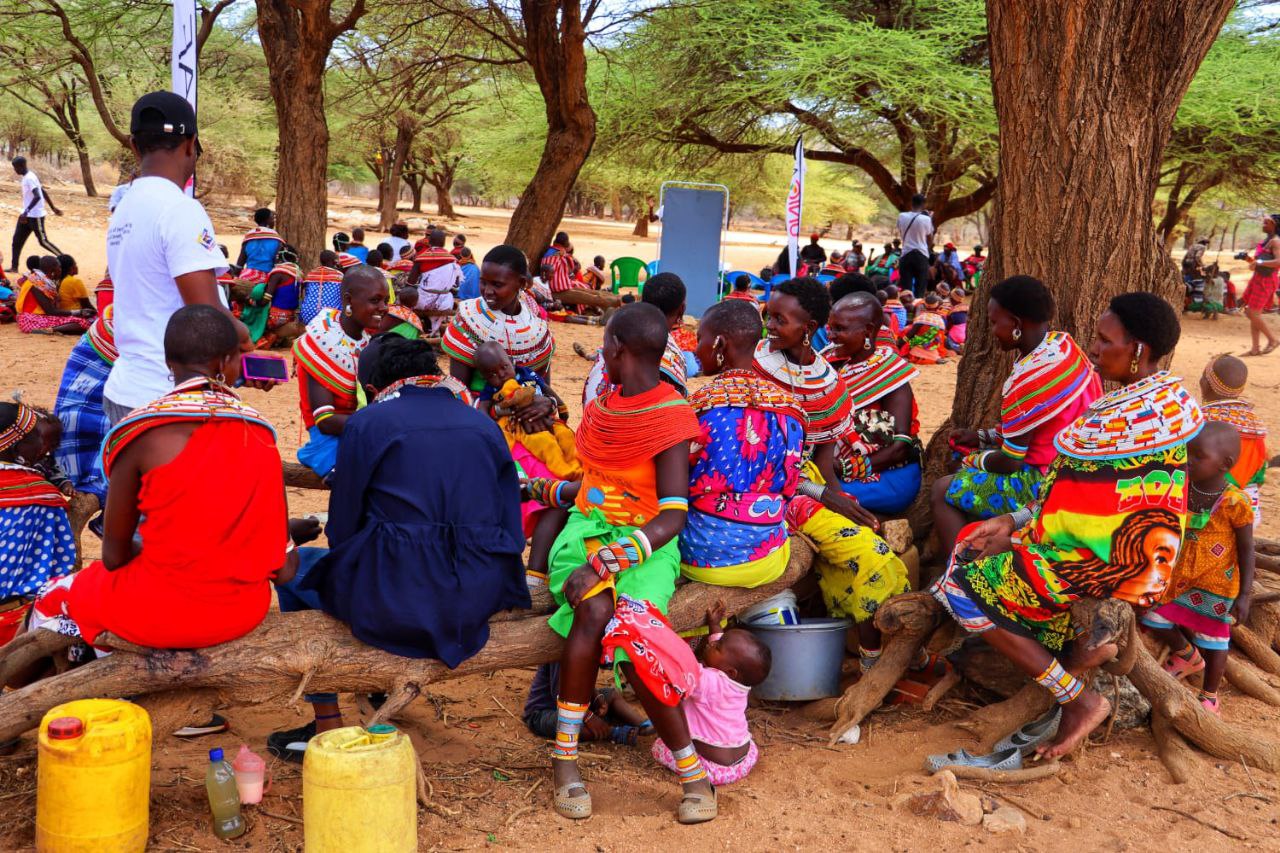
We donate sanitary pads and dignity kits to girls, and to boys and men who need support with hygiene and dignity. We focus on counties where distance, drought and cultural barriers make basic supplies hard to reach. A kit is small; what it protects, a girl’s attendance, confidence and health, is not.
3. GBV prevention, reporting and referral
We train adolescent girls, boys and young women to understand the forms of gender-based violence, know survivor-centred principles (safety, confidentiality, respect, informed consent), and use referral pathways to health, psychosocial, legal, police and shelter services. In Mnarani, Kilifi, participants practised role-plays and mapped local entry points. Simplified referral cards are being produced for every participant.
4. Annual Free Medical Camps
Every year Afrikea and its partners take a full medical camp to a community with limited access to care. Read more about the camps →
5. Feeding street-connected and homeless families
Afrikea provides food to families living on the streets, meeting immediate needs while connecting them to longer-term support such as health services, school placement for children and livelihood training. Through partnerships we provide over 45 homeless families with daily food, and so far 3 of their children are in school. We also help reconnect families.
6. Policy advocacy & public dialogue
We use digital spaces like X (formerly Twitter), community forums and partnerships to press for gender-responsive policy, free menstrual products, positive masculinities and stronger protection for survivors.